
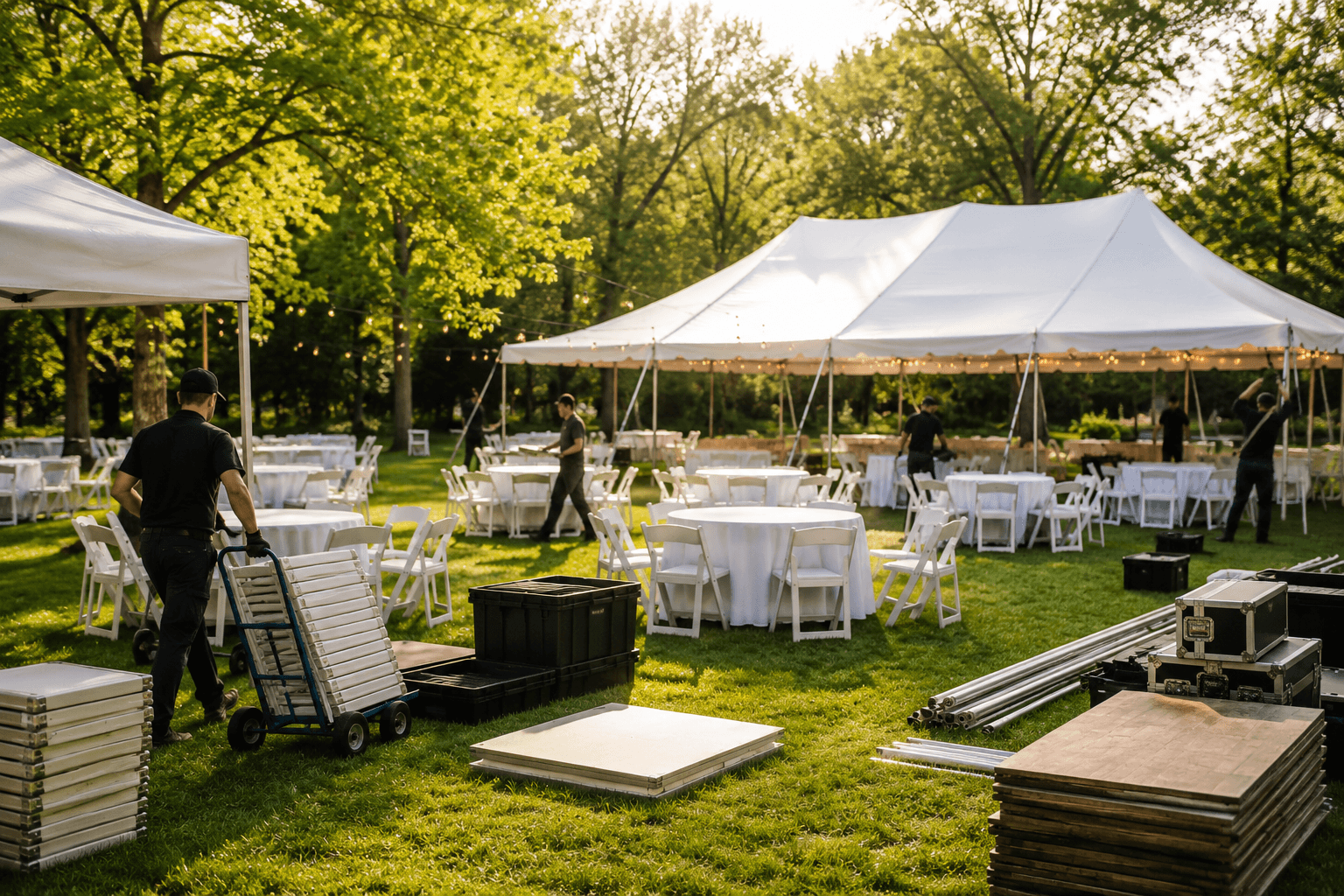
Outdoor Event Setup Basics for Seasonal Transitions
Outdoor events can feel straightforward during mild weather, but seasonal transitions often introduce challenges many organizers do not anticipate. A setup that works perfectly in midsummer may not function the same way during early spring or shifting weather conditions.
That’s why people frequently search for outdoor event setup tips before planning spring outdoor events, festivals, private gatherings, or community celebrations. Seasonal transitions affect everything from ground conditions and seating layouts to power access, tent placement, and guest comfort.
Understanding the basics of event infrastructure and rental coordination can help create smoother setups while reducing last-minute adjustments on event day. By the end of this guide, you’ll have a clearer understanding of how outdoor event setups are typically planned during seasonal changes and what factors matter most when preparing outdoor spaces.
What Should You Consider First When Planning an Outdoor Event Setup?
One of the first steps in outdoor event setup planning is evaluating the event site itself.
Many people begin by choosing tents, tables, or entertainment before assessing how the location may affect the setup process. However, outdoor environments often introduce logistical variables that directly influence layout decisions.
Some of the most important early considerations include:
- Ground conditions
- Drainage and moisture levels
- Sun exposure and shade
- Wind patterns
- Vehicle access for setup crews
- Electrical access points
- Walking surfaces and pathways
Spring outdoor events often involve softer ground conditions due to rain and seasonal thawing. This can affect tent anchoring, flooring stability, equipment transport, and seating placement.
Professionals typically evaluate the environment first before finalizing the event layout or equipment plan.
For readers exploring broader setup logistics and planning considerations, this guide on large event rental logistics provides additional context on how larger outdoor events are coordinated.
How Does Weather Affect Outdoor Event Infrastructure?
Seasonal transitions create unpredictable conditions that can influence nearly every part of an outdoor event setup.
Even mild weather shifts may affect:
- Guest comfort
- Equipment stability
- Seating behavior
- Vendor operations
- Traffic flow
- Power usage
Temperature Changes
Spring temperatures often fluctuate throughout the day. Morning setups may begin in cool conditions before transitioning into warmer afternoon temperatures.
This affects decisions related to tent coverage, shade planning, heating or ventilation, seating placement, and food service timing.
Rain and Ground Conditions
Rain preparation is one of the most important parts of event infrastructure basics. Wet ground can create muddy walkways, unstable seating areas, and transportation challenges for equipment.
Professionals often prepare backup layouts or protected pathways when planning spring outdoor events.
Wind Exposure
Wind can affect tents, signage, décor, staging, and seating arrangements. Open outdoor areas may require additional stabilization measures depending on structure type and equipment placement.
How Does Rental Coordination Work for Outdoor Events?
Rental coordination involves organizing multiple setup components so they function together efficiently on event day.
Many outdoor events require several interconnected elements, including:
- Tents
- Tables and chairs
- Lighting
- Dance floors
- Catering equipment
- Staging
- Audio systems
- Restroom facilities
One common mistake during seasonal event planning is scheduling deliveries without accounting for setup order.
For example:
- Flooring may need installation before seating arrives.
- Electrical access may need verification before entertainment equipment is installed.
- Tent placement may affect vendor spacing and walking lanes.
Effective rental coordination focuses on timing, spacing, accessibility, and how individual setup elements interact within the larger event layout.
Those reviewing combined setup solutions and event structure examples can also explore the complete party package category to better understand how multiple event components are often grouped together during planning.
What Are the Most Important Outdoor Event Setup Areas?
Outdoor event layouts usually work best when planners think in zones rather than treating the venue as one open space.
Different setup areas serve different purposes and often require separate planning considerations.
Guest Seating Areas
Seating zones should allow comfortable movement while maintaining visibility and accessibility throughout the event.
Vendor and Food Service Areas
Food stations and vendors usually generate higher foot traffic and require wider walkways and operational spacing.
Entry and Registration Zones
Guests entering the event should have clear access points that avoid congestion during arrival periods.
Equipment and Utility Areas
Power access, generators, storage, and technical equipment often require protected locations away from primary guest pathways.
Weather Protection Zones
Covered areas become increasingly important during seasonal transitions when weather conditions may shift quickly throughout the event.
For additional educational resources related to setup logistics and outdoor event planning, readers can explore the broader event rentals category.
How Do Professionals Prepare for Seasonal Outdoor Events?
Experienced event planners usually approach outdoor setups with flexibility in mind.
Instead of planning only for ideal weather conditions, professionals often prepare for multiple scenarios that could affect the event environment.
This may include:
- Alternate layouts
- Backup tent coverage
- Flexible seating arrangements
- Additional walkways
- Protected equipment areas
- Weather-sensitive scheduling adjustments
Professional planning also prioritizes guest movement and operational efficiency.
Rather than focusing only on aesthetics, experienced planners consider:
- How guests will circulate
- Where lines may form
- Which areas need protection from weather changes
- How vendors and staff will access equipment
- Whether emergency pathways remain clear
This broader planning approach helps outdoor events remain functional and organized even when seasonal conditions shift unexpectedly.
Frequently Asked Questions About Outdoor Event Setup Tips
What should you plan first for an outdoor event setup?
Most planners begin by evaluating the event site, including ground conditions, weather exposure, access points, and available space for equipment and guests.
How do seasonal changes affect outdoor event planning?
Seasonal transitions can impact ground stability, weather protection needs, guest comfort, power usage, and equipment placement throughout the venue.
Why is rental coordination important for outdoor events?
Rental coordination helps ensure that tents, seating, staging, lighting, and other equipment are delivered and installed in the correct sequence for efficient setup.
How do you prepare an outdoor event for rain?
Rain preparation often includes tent coverage, protected walkways, drainage planning, backup layouts, and covered equipment areas.
What areas usually need the most setup planning?
Guest seating, food service zones, entrances, utility areas, and weather protection spaces typically require the most logistical attention.
How early should outdoor event setups begin?
Setup timing depends on event size, infrastructure requirements, weather conditions, and the number of equipment elements involved in the installation process.
Final Thoughts on Outdoor Event Setup Basics
Outdoor event setup tips become especially important during seasonal transitions when weather conditions and environmental factors can change quickly.
Thoughtful planning around event infrastructure basics, guest movement, rental coordination, and weather preparation can help outdoor events feel more organized and functional throughout the day.
Understanding how setup components interact also makes it easier to anticipate logistical challenges before installation begins.
If you’d like to explore this topic further, related event planning guides can provide additional insight into outdoor event coordination, equipment layouts, and seasonal preparation strategies.